Master Series
Dr. Najat Makki — Reading the Past Through the Present
An exclusive conversation with Dr. Najat Makki
Niotah Journal · August 27, 2026
Niotah introduction
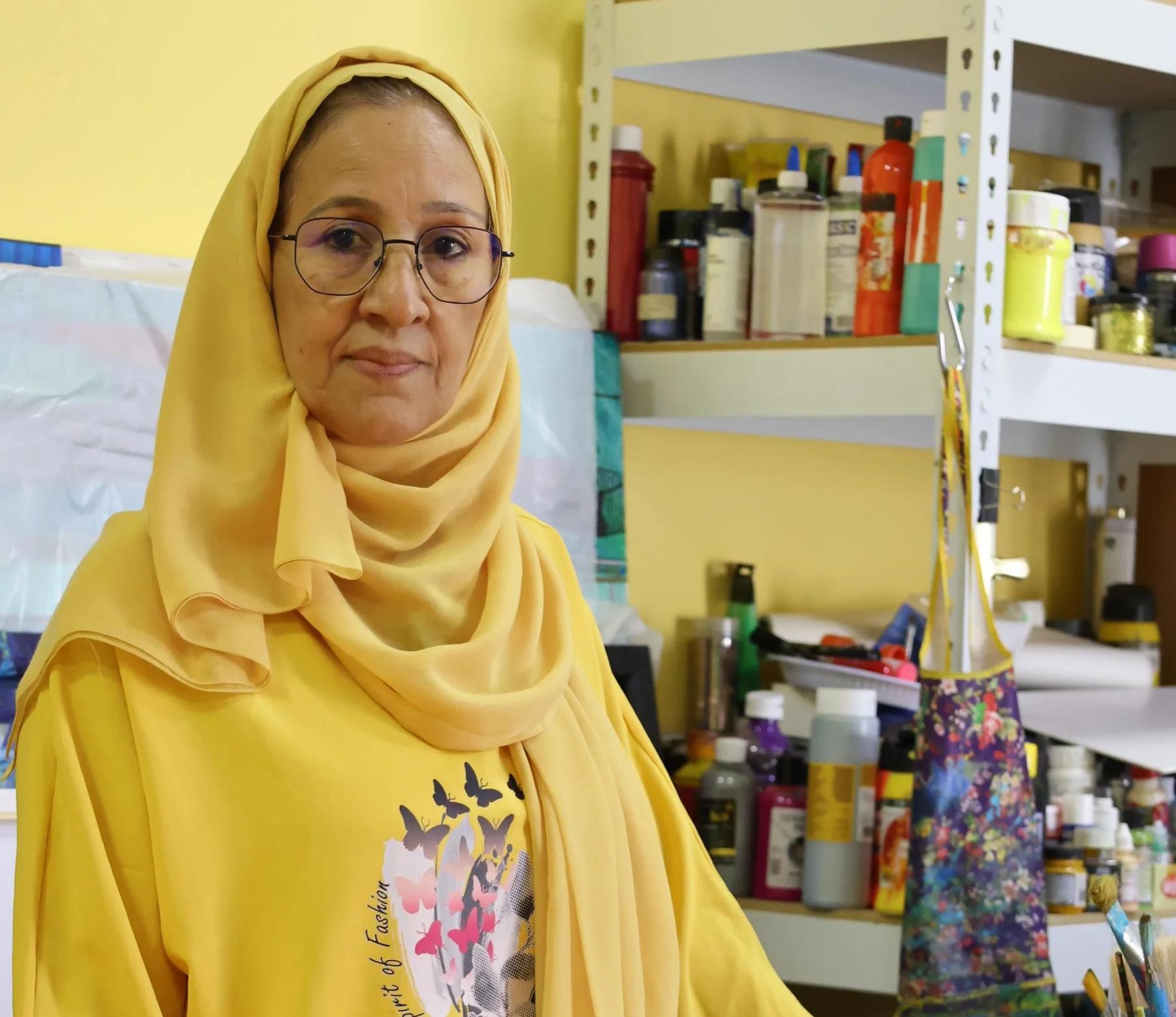
Niotah opens the Master Series with a long-form conversation with Dr. Najat Makki — a pioneering voice in Emirati art whose practice has evolved across pigment, memory, and the shifting landscape of the Gulf for more than four decades.
THE BEGINNINGS
Sea, Light, and the Spark of Imagination
An artist, a witness, and a living archive of the Emirates.
Niotah
You are one of the pioneering figures of Emirati art. Looking back at the beginning of your journey, what inspired you to become an artist, and what was it like to pursue art during those early years in the UAE?
“I felt that I saw things differently, and that color, shadow, light, shape, and movement could all transform into subjects to weave a common language between me and everyone around me.”
Dr. Najat Makki
Art has lived inside me since childhood due to my environment filled with stimuli. I was born in Dubai, where the sea, light, and old houses were an integral part of my psychological and spiritual makeup. I felt that I saw things differently, and that color, shadow, light, shape, and movement could all transform into subjects to weave a common language between me and everyone around me. As days went by, my understanding of my surroundings evolved into a deeper comprehension, translating it into a visual language through spontaneous doodles on papers and walls. I would sail with my imagination every time I listened to the women gathering with my mother in the evening, exchanging stories and tales. I listened intently to those narratives rich in their imaginative dimensions, filled with legends, heroics, and diving journeys, finding in them fertile material that settled deep in my memory.
As for the beginnings of my artistic journey, I dreamed of being an artist since I understood the meaning of art. The moment I entered school, I felt as if someone had grasped the essence of what stirred inside me, bringing peace to my heart. My teacher took my hand on paths of knowledge related to art. During those years, practicing visual arts in the United Arab Emirates was in its infancy, and the experience was particularly challenging for women since society did not yet view art as a clearly defined professional field as it is today. Therefore, I had to firmly hold onto my burning desire to learn and carve my way toward developing my talent. My studies in fine arts in Cairo marked a significant turning point in my life, as they provided me with academic knowledge and broadened my horizons, leading me to return to the UAE with a desire to be an integral part of the artistic movement that was taking shape in the country.
THE EVOLVING LANDSCAPE
Color, Memory, and the Shifting Gulf
Niotah
Your artistic journey has developed alongside the transformation of the UAE. How has the changing cultural landscape of the Emirates influenced your work and your artistic identity?
Dr. Najat Makki
I cannot separate my artistic experience from the experience of the Emirates itself. I have lived through the stages of development and transformation that the country has undergone as it shifted from a limited artistic scene to a broad, comprehensive cultural movement. Having witnessed and actively participated in these stages, I have seen how this evolution granted Emirati artists the space for experimentation, dialogue, and openness to the world.
I feel that this global openness has deeply influenced my practice, just as my work has, in its own way, shaped the Emirati artistic movement of which I am a part. Yet, opening myself to the world never meant distancing myself from my local roots; on the contrary, it made me far more conscious of what our environment inherently holds.
Consequently, my works do not treat heritage merely as decorative motifs or static symbols. Instead, I redefine heritage through raw environmental materials, bringing them into my art as living subjects that form a broader framework for interpreting the artwork. I incorporate these elements to serve as a visual repository of memory.
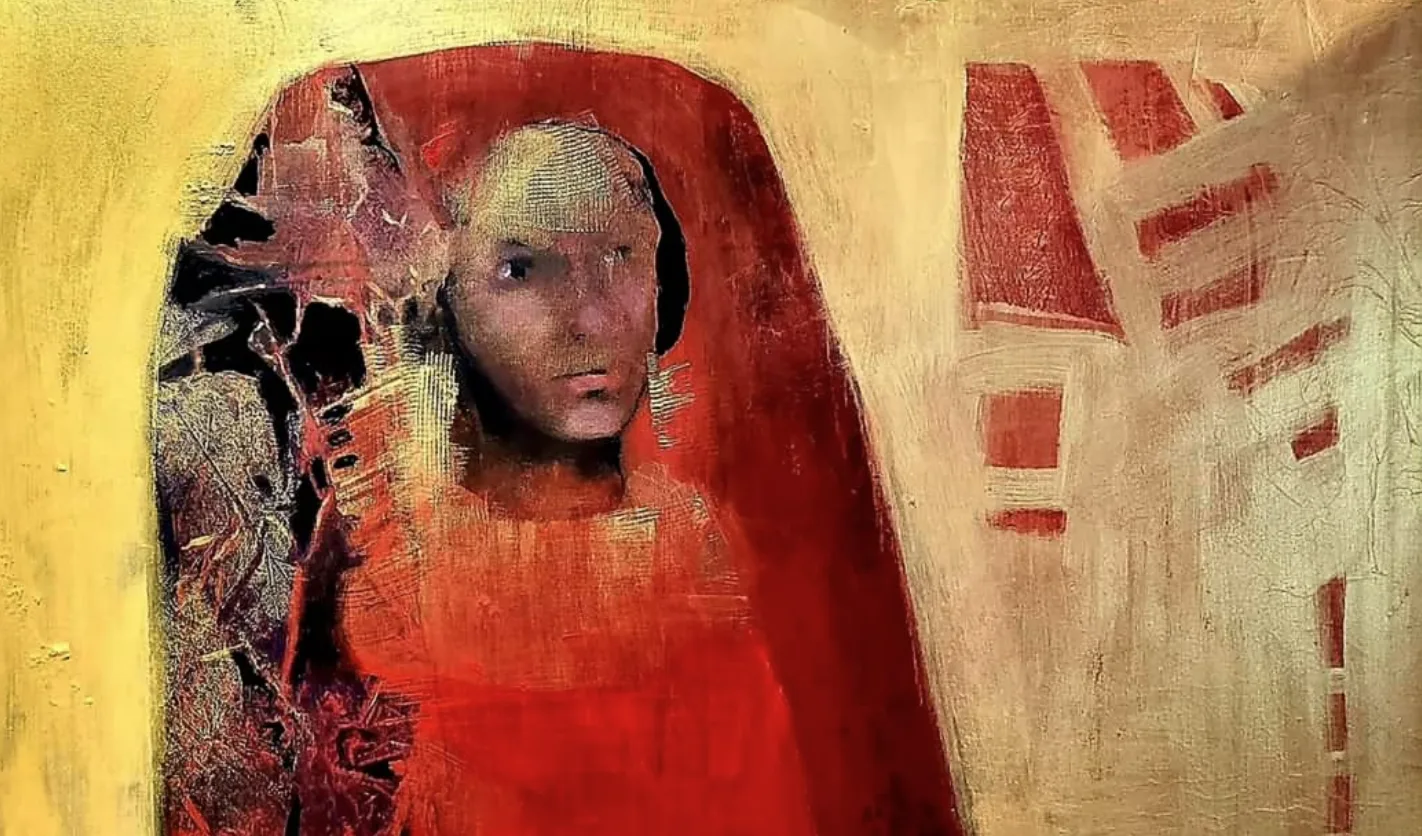
Color in my practice is never just an aesthetic choice; it is memory itself—a language carrying profound intellectual weight. Over time, I began to treat negative space not as a silent backdrop, but as an active component of the composition, all while continuously experimenting with new techniques in search of a fresh vision. These structural shifts have powerfully informed my central themes—most notably the figure of the woman. Women have become a vital focal point in my practice: transformed into an aesthetic act and recognized as active forces within society, framing the subject and enriching the viewer's experience through the movement and rhythm of line.
“I cannot separate my artistic experience from the experience of the Emirates itself.”
THE ESSENCE OF IDENTITY
The Spectrum of Women, Desert, and Sea
Niotah
Your work often engages with identity, memory, nature, heritage, and the female experience. How have these themes evolved throughout your practice?
“The presence of women as a spectrum in my practice signifies their constant presence everywhere”
Dr. Najat Makki
I believe that my artistic experience was not merely a personal journey, but rather a continuous endeavor to serve as a mirror for my country. The works I have presented are visual memories that seek to preserve the features and spirit of the time and place in which I was born and lived. Therefore, everything I have created is a sincere attempt to connect color with identity, form with memory, and individual experience with the collective human spirit. I wanted to express my country in a language understood by everyone, and to portray women as a heart that embraces the world, reflecting all the profound meaning this carries. I also sought to express identity as I truly feel it toward my country—with deep loyalty and commitment. For me, the environment is both subject and material: a visual and intellectual vocabulary whose elements transform in my work into deeper connotations of belonging.
The presence of women as a spectrum in my practice signifies their constant presence everywhere; they may not always appear in a realistic form, but they emerge through line, mass, and color. I do not treat them as mere subjects, but find in them enduring symbols of feminine presence, patience, and strength. Sometimes, we see them possessing immense dignity and self-esteem through color—appearing majestic in that traditional cloak that wraps around their bodies as they pass between old houses, longing for a beautiful era. We find them adorned and dignified, whether in traditional life or while holding the highest professional positions today.
As for identity, I encapsulate it in the color blue that invigorates hearts and the color yellow that elevates souls—that desert which has given the Emirati person patience and strength, and has bestowed women with dignity and grandeur.
PIONEERING THE FUTURE
Preserving the Archive and Nurturing the Next Generationtion
Niotah
As a pioneering Emirati woman artist, what do you feel has changed for women artists in the Gulf, and what do you believe still needs to be nurtured for the next generation?
“There is an important aspect, which is documenting the experiences of pioneering female artists and preserving their archives and works so that parts of the history of the Gulf art movement do not fade with time.”
Dr. Najat Makki
I believe that the efforts of female artists in the Gulf region represent a challenge, struggle, and arduous journey. Each artist is part of the change that has occurred in the region; they have made attempts to reach what the feminist movement has achieved in a time when art was not seen as a culture that elevates the individual and their behaviors as it is today. This is not easy; it requires patience, wisdom, deliberation, and balance. We find that the production of Gulf female artists in recent years shows that they are not only present in the art scene but are also capable of being active and influential in shaping it.
There is an important aspect, which is documenting the experiences of pioneering female artists and preserving their archives and works so that parts of the history of the Gulf art movement do not fade with time, remaining preserved for the new generation to find material they can explore.
THE LEGACY
Reading the Past Through the Perspective of the Present
Niotah
After decades of creating and contributing to the artistic landscape of the UAE, what do you hope your work and your journey will leave behind for the generations of artists who come after you?
“I hope that the new generation reads my work and understands that identity does not mean returning to the past, but rather the ability to read the past with the perspective of the present.”
Dr. Najat Makki
I aspire to leave a positive impact through what I have contributed during this journey, and for my work to stand as a quiet testament to the history of the Emirates. I hope that the new generation reads my work and understands that identity does not mean a passive returning to the past, but rather the ability to read the past with the perspective of the present.
—
Curated & Edited by Niotah
Published as part of the Niotah Master Series
Dr. Najat Makki’s practice continues to serve as an enduring bridge between the memory of the Emirates and its contemporary artistic horizon. Special thanks to Dr. Najat Makki for contributing her voice and archive to Niotah.
About the artist
Dr. Najat Makki
Dr. Najat Makki is a pioneering Emirati artist whose practice spans painting, drawing, sculpture, and experimental materials. In 1977, she became the first Emirati woman to receive a government scholarship to study art abroad, travelling to Cairo to pursue her studies at the College of Fine Arts. Across more than four decades, her work has explored colour, memory, nature, heritage, and the evolving cultural landscape of the Gulf.
Commentary
0 notes
- Loading commentary…