The history of modern and contemporary art in the Gulf is often told through institutions, exhibitions, movements, and the names of artists who helped define the region’s cultural landscape. Yet behind this history is another story—one shaped by women who began creating, exhibiting, teaching, documenting, and challenging artistic conventions at a time when the infrastructure for contemporary art in the Gulf was still taking form.
Long before the region’s art scene became internationally visible, these women were developing their own visual languages. They travelled abroad to study, returned home with new ideas, established studios and cultural spaces, documented rapidly changing societies, and transformed questions of identity, heritage, memory, gender, and place into artistic expression.
Their contribution was not simply to the history of women’s art. It was fundamental to the development of Gulf art itself.
From pioneers to cultural architects
In Saudi Arabia, Safeya Binzagr and Mounirah Mosly occupy an important place in this early history. In 1968, they became among the first Saudi women to publicly exhibit their work in the Kingdom. Their practices emerged at a moment when opportunities for women artists were limited, yet both found ways to make art visible.
Binzagr devoted much of her career to documenting Saudi society, its architecture, customs, clothing, rituals, and everyday life. Her work became an extensive visual record of a society undergoing rapid transformation. She later founded Darat Safeya Binzagr in Jeddah, creating a cultural space dedicated to preserving and sharing her artistic legacy and Saudi heritage. (Riyadh Art)
Mounirah Mosly was equally significant in the early development of Saudi women’s art. Her work extended beyond painting into graphic design and cultural initiatives, demonstrating how women artists were not simply participating in an emerging art scene—they were actively helping to build it. (Vogue Arabia)
In Kuwait, Thuraya Al-Baqsami emerged as one of the Gulf’s most distinctive artistic voices. An artist, writer, illustrator, and activist, Al-Baqsami began exhibiting and publishing from a young age and later studied in Cairo and Moscow. Her practice brought together symbolism, mythology, memory, resistance, cultural heritage, and the female experience. (thuraya)
Her work also demonstrates the breadth of the pioneering generation. Gulf women artists were not working within a single aesthetic or subject. They were responding to war, political change, social transformation, identity, and personal experience, while simultaneously developing sophisticated international artistic practices.
The Emirati pioneers
In the United Arab Emirates, the history of women in the arts emerged through several pioneering trajectories. Among the earliest was Fatma Lootah, who left the UAE in 1973 to pursue formal art education at the Art Academy of Baghdad. Her journey represents an important early moment in the history of Emirati women seeking artistic education beyond the country’s borders.
Born and raised in Dubai, Lootah later continued her artistic education in Washington, D.C. Although she has lived in Verona since the 1980s, her relationship with Dubai has remained central to her artistic identity. Her practice has moved across performance, abstraction, painting, and installation, developing an individual language that bridges different cultural environments.
Lootah’s career reflects an important dimension of Gulf women’s artistic histories: the ability to move between places while maintaining a profound relationship with one’s cultural origin. Her practice demonstrates that Gulf identity is not fixed geographically; it can travel, transform, and expand without losing its roots.
Alongside this early trajectory, Najat Makki became an important figure in the development of Emirati modern and contemporary art. In 1977, she became the first Emirati woman to receive a government scholarship to study art abroad, travelling to Cairo to study at the College of Fine Arts. Her subsequent practice moved through different phases, from representations rooted in her environment and cultural heritage to increasingly abstract and experimental forms.
Makki’s work has consistently explored the relationship between place, identity, memory, colour, symbolism, and the human experience. The female figure and elements of Emirati culture have appeared repeatedly within her visual language, while her later work has moved toward increasingly layered and abstract compositions.
Her importance lies not simply in being among the early women artists of the UAE, but in the body of work she developed and the role she played during a formative period in the country’s artistic history. Together with artists such as Fatma Lootah, she forms part of a generation of Emirati women whose different paths contributed to the emergence of a broader cultural and artistic landscape.
Beyond national borders
The story of Gulf women artists cannot be divided neatly according to national boundaries.
Across the region, artists were responding to societies experiencing enormous change. They documented disappearing architecture and traditions, questioned inherited identities, explored women’s experiences, and experimented with international artistic languages while developing distinctly regional perspectives.
Artists such as Wafika Sultan and Fatma Al Shebani contribute to the story of women’s artistic development in Qatar, extending this history beyond the better-known narratives of Saudi Arabia, Kuwait, and the UAE.
Their inclusion is important because the history of Gulf art is not a single national story. It is a network of interconnected artistic histories—shaped by movement, education, cultural exchange, and shared experiences of rapid social transformation.
Heritage as a living language
One of the most powerful threads connecting many of these artists is their relationship with heritage.
For these women, heritage was rarely something static to be preserved exactly as it was. Instead, it became a language through which they could examine the present.
This approach continues in the work of contemporary artists such as Khuloud Al Amri, whose paintings turn the traditional architecture of Jeddah into reflections on memory, disappearance, and place.
Her work demonstrates the continuity between generations: the desire to preserve cultural memory remains, but the artistic language continues to evolve.
The door, the wall, the garment, the landscape, the female figure, the object from everyday life—these can all become repositories of history.
A legacy that continues
What makes these women pioneers is not simply that they were among the first.
It is that they opened possibilities for those who came after them.
They demonstrated that a woman could be an artist, an educator, a cultural organiser, an international practitioner, a documentarian of heritage, and an intellectual voice within her society.
They created at a time when the boundaries were still being established. Today, younger generations of Gulf women artists enter a very different cultural landscape, one with galleries, museums, biennials, foundations, art fairs, universities, digital platforms, and increasingly international audiences.
But the foundations were laid earlier.
The artists of the pioneering generations did not inherit a fully formed contemporary art ecosystem. In many cases, they helped create the conditions from which today’s ecosystem could emerge.
Remembering the women who came before
To revisit these artists today is therefore not simply an act of nostalgia. It is an act of cultural responsibility.
Their works are records of places that have changed, societies that have transformed, and identities that have continued to evolve. Their careers reveal the many ways women participated in the cultural construction of the modern Gulf—not from the margins, but from within its artistic history.
At Niotah, Women Voices of the Gulf seeks to bring these voices into conversation with the present: to recognize the women who shaped the artistic landscape of the region and to place their legacies alongside the artists who are defining its future.
Because the history of Gulf art is not complete without them.
And perhaps the most important question is not simply who were the women who shaped Gulf art?
It is:
What becomes possible for the next generation because they came first?
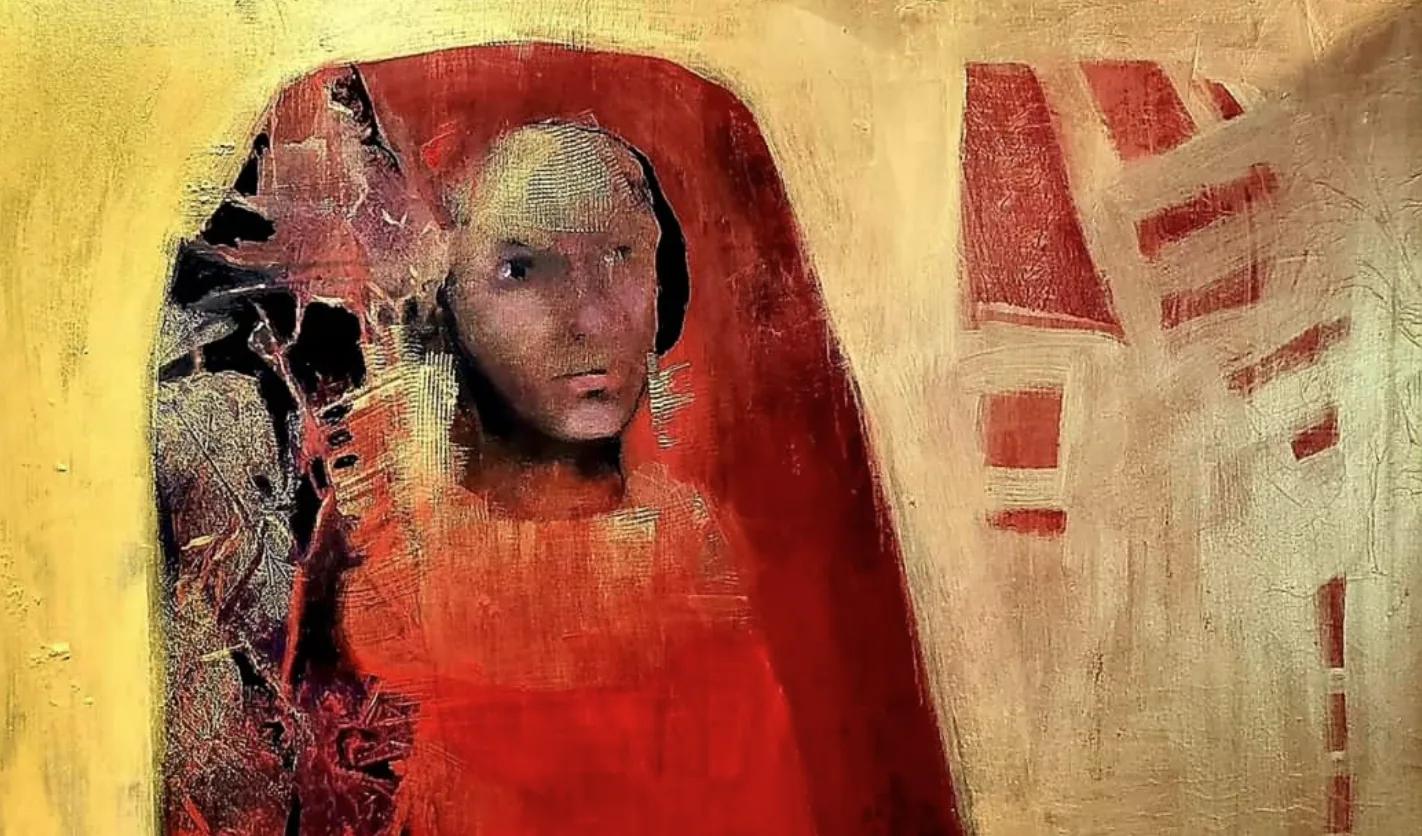
ArtWork by the great artist Fatma Lootah