Every artist starts by looking outward. We admire great painters, study their techniques, and try to understand how they transformed simple materials into works that continue to move people. In those early years, our paintings often carry traces of the artists we admire. There is nothing wrong with that. It is simply how we learn.
But there comes a moment when imitation is no longer enough.
As time passes, an artist begins to ask different questions. Instead of wondering How did they paint this? the question becomes What do I want to say? That small change marks the beginning of a much deeper journey.
People often talk about developing a style, but I believe style is only part of the story. What truly defines an artist is something less visible. It is a visual language that grows quietly over years of painting. It cannot be found in a book or copied from another artist because it is shaped by personal experience, memory, and the way each of us sees the world.
A brushstroke carries more than paint. It carries hesitation, confidence, curiosity, and emotion. Every choice matters. The colors we return to, the subjects that continue to attract us, even the way we leave empty space on a canvas, all become part of our language.
This language develops slowly.
It grows through unfinished paintings, disappointing sketches, and the countless hours spent alone in the studio. Many of the lessons that shape an artist never come from success. They come from the paintings that refuse to work. Looking back, those difficult moments often teach us more than the paintings we considered successful.
For me, painting has never been only about creating an image. It has always been a way of understanding myself. Every canvas asks a question before it offers an answer. Sometimes I begin with a clear idea and discover something completely different by the time the painting is finished.
That is what makes art so personal.
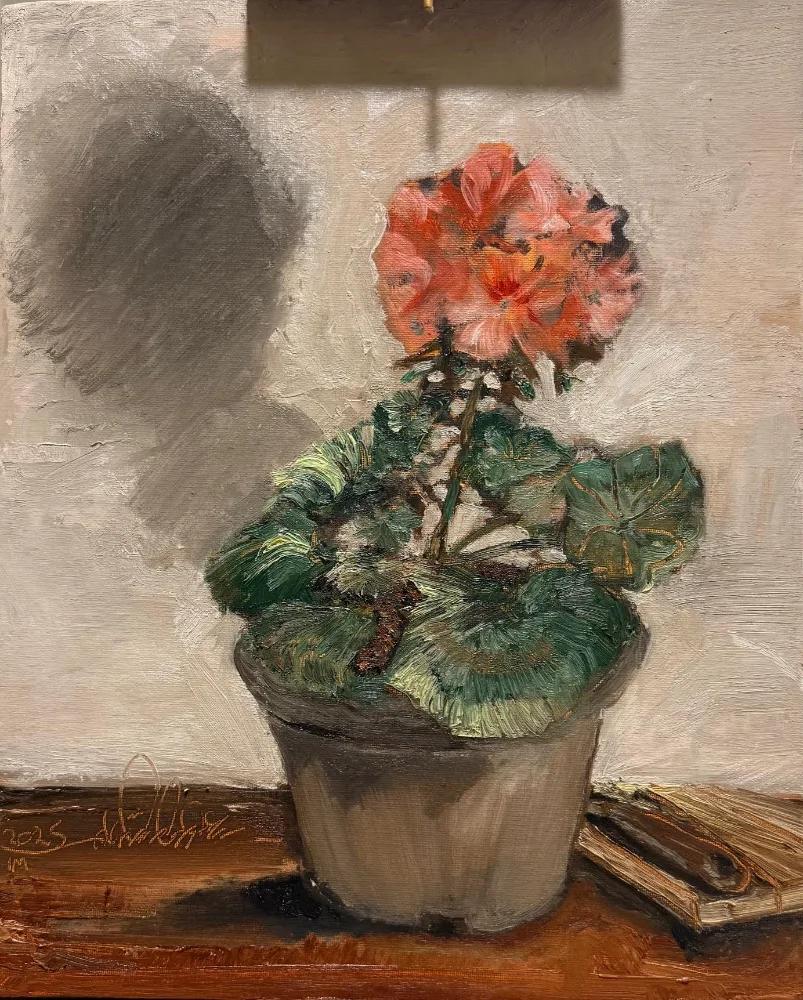
No two artists can ever speak exactly the same visual language because no two people have lived the same life. We may paint the same flower, the same street, or the same historical building, yet every painting tells a different story. The subject remains the same, but the artist changes everything.
I believe the real destination of an artist's journey is not perfection. It is honesty. There comes a point where the brush no longer feels like a tool. It becomes an extension of thought. The painting begins to say things that words cannot fully explain.
When that happens, viewers stop asking how the painting was made. Instead, they begin to feel something. They may not know why a painting moves them, but they recognize that it speaks with sincerity.
That is the language every artist spends a lifetime searching for.
The greatest achievement is not to make the brush obey your hand. It is to reach the day when the brush speaks your language.
Saad Alshahrani
Saudi Visual Artist