There are moments in life when words are simply not enough. We experience emotions that are too deep to explain, too painful to carry, or too complicated to share. Love, loss, loneliness, longing, and hope can exist within us without ever finding the right language.
And sometimes, this is where art begins to speak.
For some, art is a profession or a hobby. But when the love of art comes genuinely from the heart when it becomes deeply connected to who we are and to the emotions we carry it can become something much greater.
It can become a form of healing.
Art allows us to express and experience emotions beyond words. A single brushstroke can carry anger, tenderness, grief, or hope. A color can awaken a forgotten memory. A painting can express something that an entire conversation may fail to describe.
But the healing power of art does not belong only to those who create it.
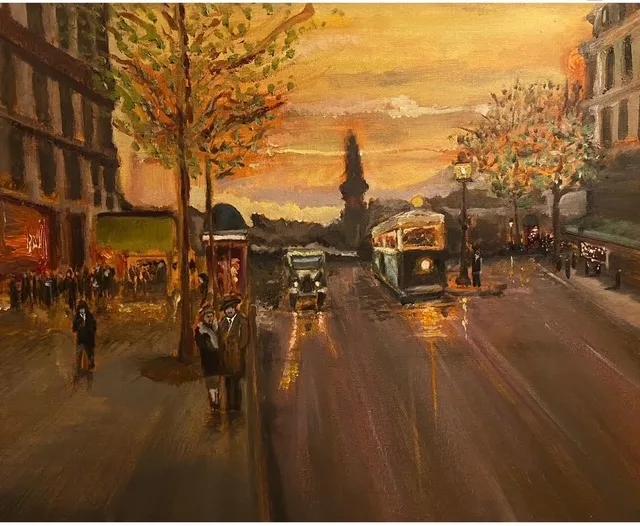
Sometimes, simply standing in front of a painting can change something within us.
We may not understand why a particular artwork moves us. A colour may remind us of a memory, a line of someone we once knew, or a composition of an emotion we have never been able to name.
Two people can stand in front of the same painting and experience completely different worlds. The artwork remains the same, but we are not the same.
This is where art becomes deeply personal.
Healing through art is not limited to painting, drawing, or creating. It can also exist in the quiet act of looking, understanding, and appreciating. It exists in the space between the lines, shapes, textures, brushstrokes, and colors.
A rough brushstroke may reflect the chaos within us. Geometric forms may remind us that even complexity can contain structure. Soft colors can offer comfort, while darker tones may allow us to acknowledge emotions we have been trying to hide.
Art does not always make us happy.
And perhaps healing is not always about happiness.
Sometimes, healing begins when we finally allow ourselves to feel.
Art can become a companion during moments of loneliness. It can offer silence when we are tired of talking and reflect emotions when we no longer understand ourselves.
Every artwork carries something from its creator, but it also leaves space for something from the viewer. A silent conversation begins between the artist and the person standing before the work. The artist speaks through colour and form; the viewer responds through memory and emotion.
Perhaps this is why art can make us feel better. Not because it removes everything that hurts, but because it helps us carry those emotions differently.
It transforms them.
Pain can become a painting.
A memory can become an image.
Loneliness can become poetry.
And even when we are only viewers, we can still recognise pieces of ourselves in the work of others.
Perhaps we do not always need art to save us.
Sometimes, we simply need it to sit beside us to remind us of beauty, of feeling, and of who we are.
Because sometimes, a single brushstroke can say everything we could never put into words.