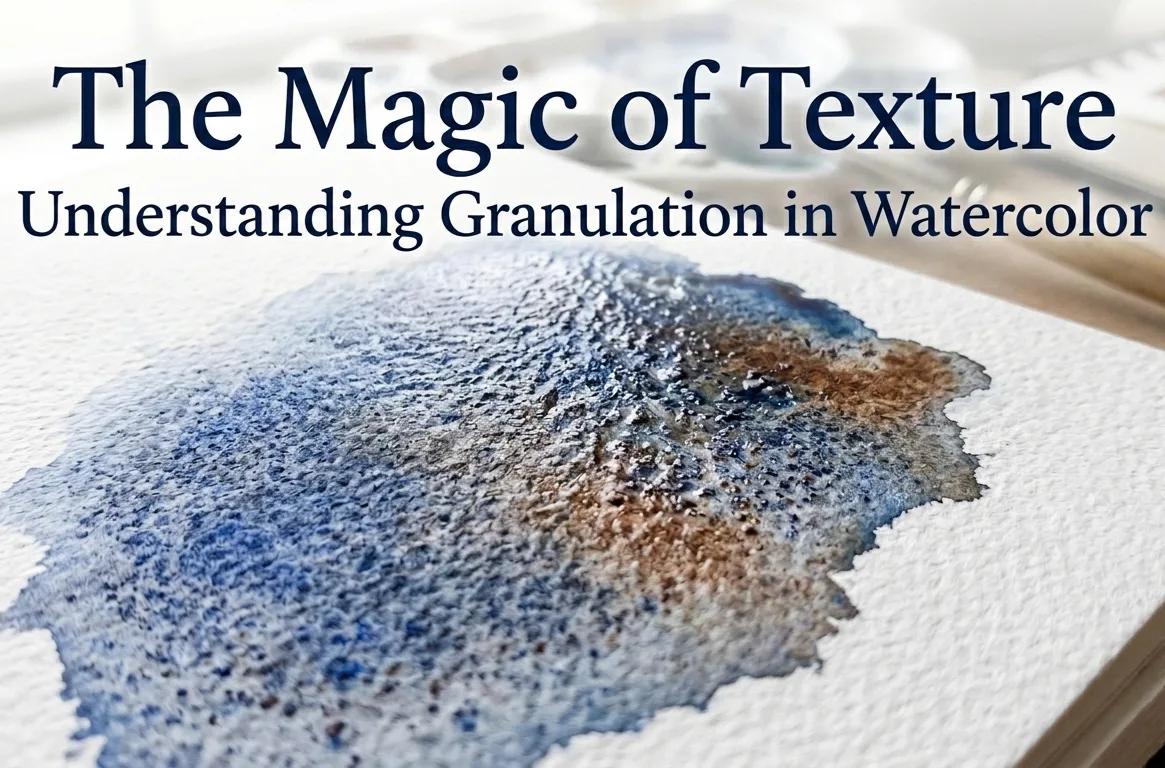
Watercolor is a medium defined by its fluid nature, transparency, and unpredictable beauty. Among all its unique traits, granulation is perhaps the most fascinating. Unlike flat, smooth washes, granulating colors create an exquisite, organic texture on the paper that breathes life into any painting. But what exactly is granulation, why does it happen, and how can artists master it?
The Science Behind the Texture
At its core, granulation is a physical process determined by the weight and size of the pigment particles used to make the paint. Every watercolor paint consists of finely ground pigments mixed with a binder, usually gum arabic. However, not all pigments are ground to the same size.
Some mineral and earth pigments-such as Cobalt, Ultramarine, Viridian, and natural Earths-have naturally heavier, larger, and more irregular particles. When mixed with a large amount of water, these heavy particles do not float smoothly across the surface. Instead, gravity pulls them down, causing them to separate from the water and settle into the tiny microscopic valleys and hollows of the watercolor paper. This uneven settling creates the beautiful, grainy, mottled effect we call granulation.
Why Artists Use Granulation
Granulation adds an extra dimension of depth and realism to a painting without requiring tedious brushwork. It acts as a built-in texture generator. Artists strategically use granulating pigments to paint:
• Natural landscapes (sand, stones, mountains, and rough earth)
• Atmospheric elements (heavy storm clouds, mist, and deep water)
• Textures in architecture (old concrete, brick walls, and weathered wood)
• Botanical and wildlife elements (rustling leaves, tree bark, or animal fur)
How to Maximize the Granulating Effect
If you want to unlock the full potential of granulating paints, keep these professional tips in mind:
1. Use Plenty of Water: Granulation requires a "lake" on your paper. The more water you use in your wash, the more freedom the heavy pigment particles have to move, separate, and sink into the paper fibers.
2. Choose Cold Press or Rough Paper: Smooth Hot Press paper has no valleys for the pigments to settle into. To see dramatic granulation, always opt for textured Cold Press or Rough watercolor paper.
3. Avoid Overworking: Once you apply a granulating wash, leave it alone. Continually brushing over a wet area will disrupt the settling particles and flatten the texture.
Embracing the Flow
Granulation is a beautiful reminder that watercolor is a collaborative medium between the artist, the water, and the paper. By understanding which pigments naturally granulate and how to guide them, you can elevate your artwork, transforming simple washes into rich, living textures full of movement and light.