We live surrounded by images. We scroll, observe, photograph, record, and move quickly from one impression to the next. Yet looking is not necessarily seeing.
To see is to pause.
It is to notice the warmth of light falling across a wall, the texture of an old surface, the movement of a figure in the distance, the silence within a landscape, or the memory that a particular colour can awaken. It is to recognize that what appears ordinary may hold an entire story.
Artists understand this instinctively. Their work often begins with an act of attention: looking at something familiar and discovering something that others have passed without noticing.
Beyond What Is Visible
An artwork does not always reveal itself immediately.
Sometimes it is the atmosphere that speaks first. Sometimes it is texture, gesture, material, or light. A painting may depict a gathering, yet what remains with us is not the individual faces but a feeling of belonging. A coastline may appear as a landscape, while beneath its surface lies memory, movement, and home.
This is where art becomes more than representation.
The artist does not simply show us something. They offer us another way of seeing it.
Through abstraction, distortion, layering, or the quiet removal of detail, artists can draw our attention away from what is obvious and toward what is felt. A faceless figure can become more universal than a portrait. A fragmented landscape can communicate memory more powerfully than a literal depiction. A textured surface can make us think not only about what we see, but about what we can almost touch.
Seeing Place
Every place has its own visual language.
The sea, the desert, an old neighbourhood, a palm tree, a traditional garment, a familiar gathering—these elements can carry meanings that extend far beyond their physical appearance.
For artists working closely with their cultural environments, place becomes both subject and memory.
They may not seek to document a tradition exactly as it was. Instead, they reinterpret it through their own perspective. Heritage can appear through colour, material, atmosphere, composition, or a particular relationship with the landscape.
In this way, culture remains alive—not because it is frozen in time, but because it continues to be seen through new eyes.
Seeing Memory
Memory is rarely precise.
We remember fragments: a particular light, the sound of a gathering, the colour of a wall, the movement of water, the texture of fabric, the shape of a distant building. With time, these fragments become softer and sometimes more powerful than the original moment.
Artists often work within this space between reality and memory.
Their images may feel hazy, layered, fragmented, or dreamlike because memory itself is not a photograph. It changes with us.
Art gives these fragments somewhere to exist.
Learning to Look Again
Perhaps one of the quietest gifts of art is that it teaches us to slow down.
A work that initially seems simple may reveal another dimension when we spend more time with it. A surface becomes a landscape. A colour becomes an emotion. A familiar object becomes a symbol. What first appeared distant begins to feel intimate.
The longer we look, the more we notice.
And perhaps this is why some artworks stay with us long after we have left them. They have changed not only what we see, but how we see.
A Different Way of Seeing
At Niotah, we believe creative work is not only about making images. It is about developing a way of seeing the world.
Artists notice what others overlook. They question what appears familiar. They preserve moments that might otherwise disappear. They transform experience into form, material, colour, movement, and thought.
And in return, they ask something of us:
To slow down.
To look closer.
To remain curious.
Because sometimes the most meaningful discoveries are not hidden somewhere far away. They are already in front of us, waiting for us to see them.
Art does not always ask us to understand. Sometimes, it simply asks us to look again.
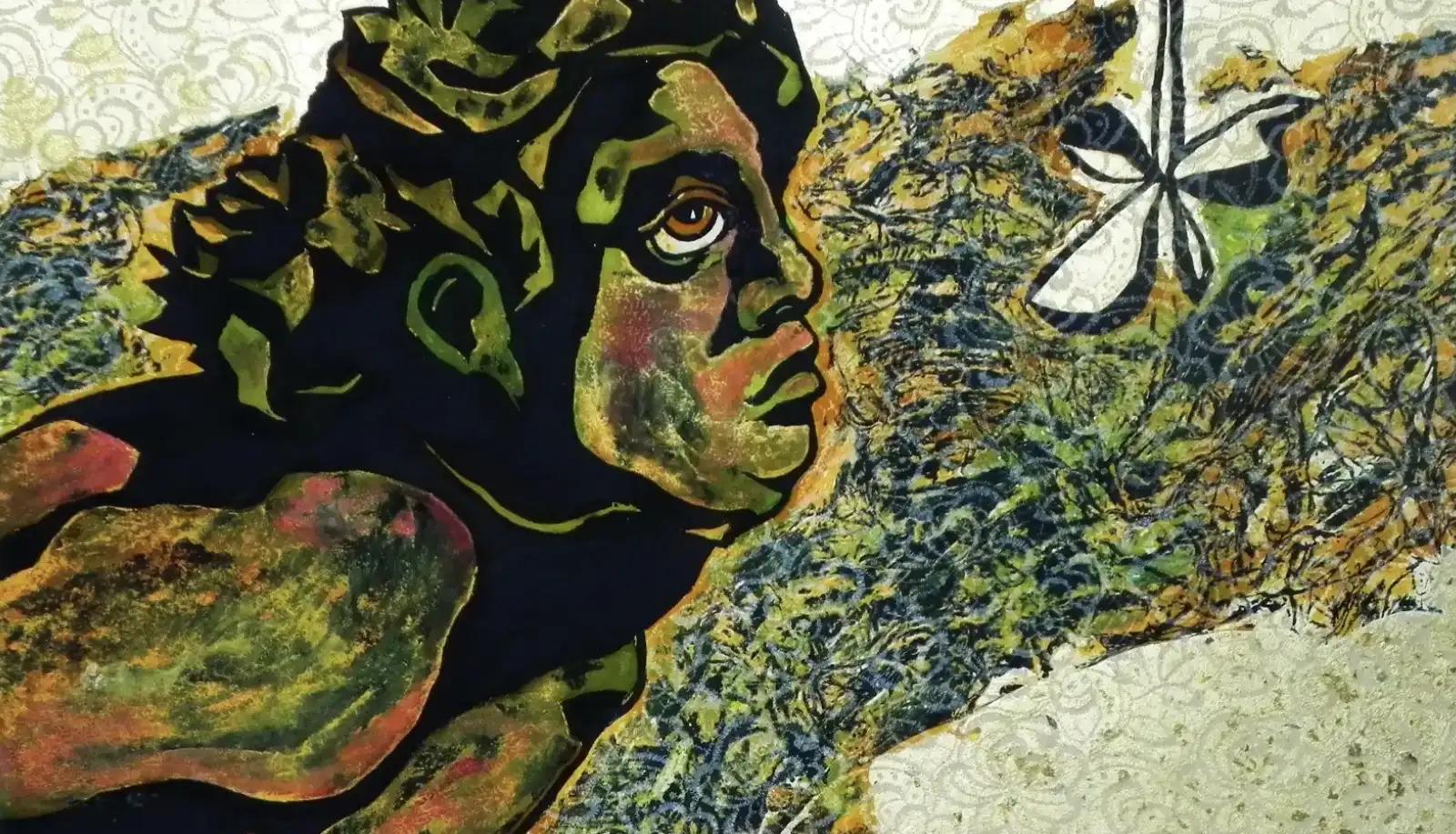
Artwork by Ahmed Taher