Art is my way of transforming inner fractures into a cohesive, structural beauty.”
In this exclusive feature for the Niotah Journal, we sit down with Ali Yazji (علي اليازجي), a visual artist and sculptor whose profound creative practice bridges modern expressive painting and tactile sculpture. A graduate of the Faculty of Fine Arts, Yazji has established a compelling presence in the contemporary art scene through notable participations, including the Fine Arts Festival.
Rooted in deep psychological exploration, his work bypasses the limitations of language to engage directly with the human subconscious, exploring themes of existence, memory, and the intricate duality of loss and transformation. Operating within the dynamic cultural landscape of the UAE, Yazji invites us into his studio to discuss his artistic genesis, the influence of his environment, and the silent dialogues frozen within his materials.
How have your origins, cultural background, and experiences living in the UAE influenced your artistic vision and the themes you explore?
The transition between my cultural roots and the dynamic environment of the UAE, specifically Sharjah, has profoundly shaped my vision. This place represents a dialogue between the authenticity of the place and the rapid pace of future architecture, deepening my sense of duality and making me realize that the essence of nostalgia and the search for meaning remains constant despite environmental changes.
My work embodies this contradiction between the longing for my roots and the acceleration of the present. However, the UAE is not an easy place to launch a new artist; rather, it compels them to create and compete.
Your artistic practice often explores the duality of loss and transformation. What personal or artistic experiences have led you to engage with these themes?
Duality is the fundamental law of existence. My engagement with loss and transformation stems from observing psychology, my own psychological complexities, external pressures, and psychological shifts originating from outside.
The behavior of materials is also crucial. When I sculpt wood or work with color, I put the material in a state of flux and loss to arrive at a new form. Personal experiences have led me to see loss as a psychological threshold for passage, not an end. Art is my way of transforming inner fractures into a cohesive, structural beauty.
Whether you work in painting or sculpture, what do you hope viewers will feel, wonder about, or discover when encountering your artwork?
I don't want the viewer to look at the work; rather, I want the work to look into its depths, to act as a psychological mirror, bringing them into a silent confrontation with their unconscious. This allows them to question their own dualities, find solace in loss, and discover that transformation is a shared human destiny. The dialogue is completed when the work evokes a hidden memory or an unspoken truth.
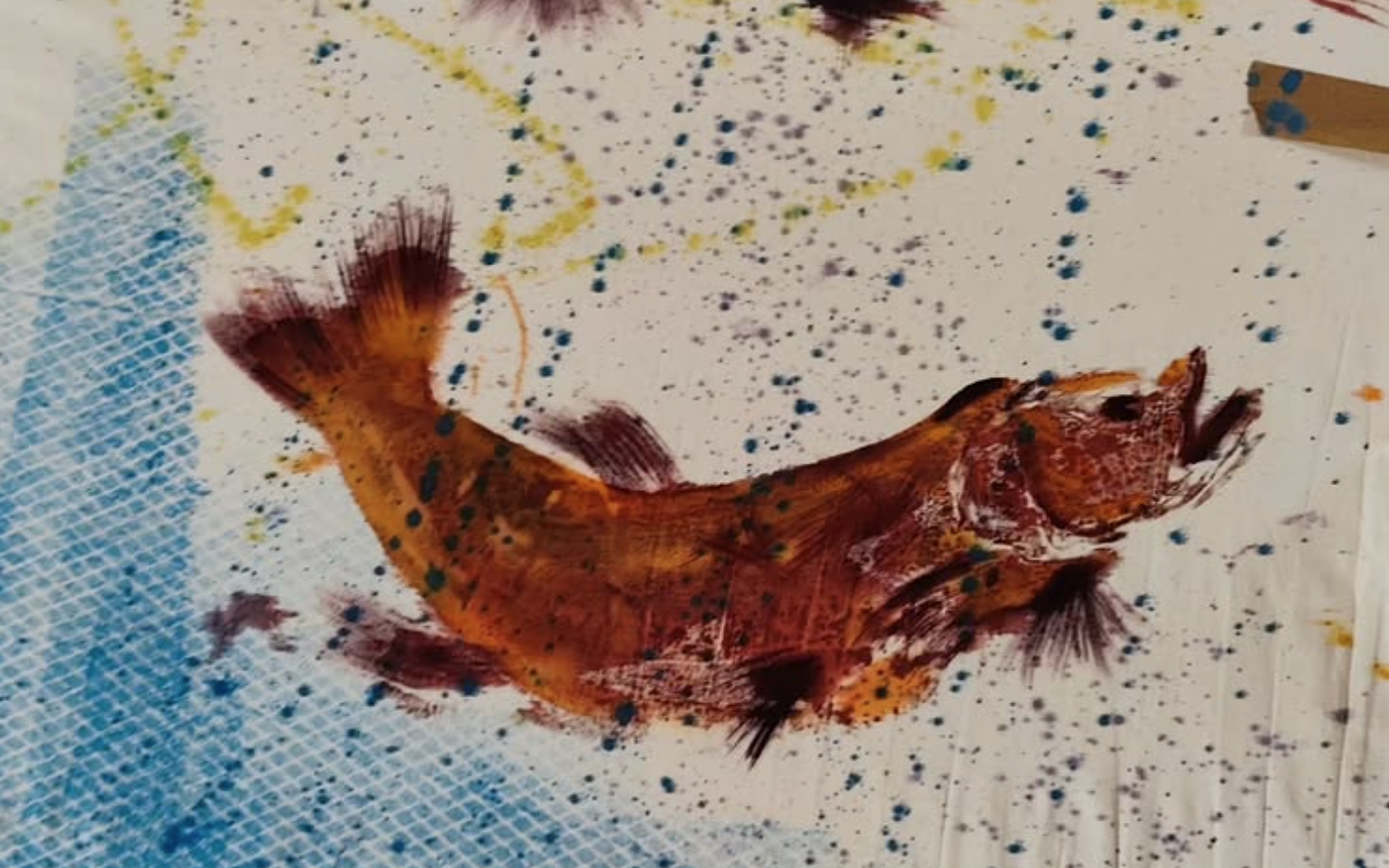
Artwork photography courtesy of the artist. "Escaping the Abyss"
Niotah Journal © 2026
Archiving heritage. Elevating contemporary mastery.