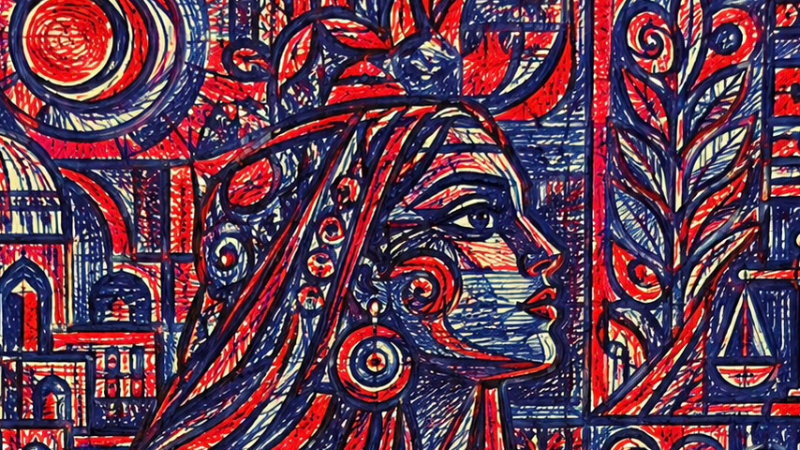
In many Arab societies, a woman grows up surrounded by expectations—how she should speak, what she should become, what is acceptable for her, and sometimes even how much space she is allowed to occupy. These expectations can become so deeply rooted in culture and family life that a woman may find herself questioning where the boundaries between her own identity and the identity society has created for her truly lie.
For me, the recognition of women is not about giving them a place that was never theirs. It is about acknowledging a place they have always occupied.
Arab women have always been part of the story of their communities: as mothers, daughters, professionals, artists, educators, leaders, and creators. Yet recognition is not always equal to presence. A woman can be present and still feel unseen. She can contribute and still have her voice overlooked. She can be strong and still be expected to remain silent.
This is why the question of identity becomes important. Who is a woman when she is allowed to define herself?
I believe identity should not be something imposed by society. It should be something discovered, questioned, protected, and expressed. A woman should not have to choose between her cultural identity and her individuality. She should be able to carry her heritage while also creating her own path.
My work comes from this tension between what we inherit and what we want to become. It reflects a broader feeling that exists within many communities: the struggle between tradition and change, between silence and expression, and between being seen through the expectations of others and being recognized for who we truly are.
The conversation about women in the Arab world is not simply a conversation about rights or social roles. It is also a conversation about human dignity and belonging. When a woman is heard, when her choices are respected, and when her achievements are recognized, society does not lose something—it becomes richer.
Perhaps the most important change begins when we stop asking whether a woman deserves a place and start asking why she ever had to prove that she deserved one.
For me, this work is therefore not only about women. It is about visibility, identity, and the right of every person to exist beyond the expectations placed upon them.
A society truly recognizes its women when they no longer have to ask for permission to be seen.