For years, the global art narrative surrounding Dubai centered on a highly synchronized, seasonal calendar. The city would become a vibrant epicenter during deep cultural windows like Dubai Art Season, drawing international collectors, launching high-profile exhibitions, and hosting premier commercial fairs. But beneath the surface of these transient, high-energy moments, a much deeper, systemic transformation has been taking place.
Dubai is shifting its cultural paradigm. The focus is moving away from purely event-driven hype and turning toward building a permanent, bulletproof, year-round institutional infrastructure. It is an evolution from an art destination into a self-sustaining creative sanctuary.
A Landmark Framework for Longevity
At the heart of this structural shift is a clear recognition that for a creative ecosystem to thrive, its artists, independent curators, and small galleries require consistency over spectacle. This philosophy is perfectly realized in the recently unveiled Creative Sector Resilience Portfolio, a landmark initiative launched under the directives of Her Highness Sheikha Latifa bint Mohammed bin Rashid Al Maktoum, Chairperson of Dubai Culture and Arts Authority.
Developed as a cornerstone of a broader AED 1 billion economic support framework in collaboration with the Dubai Future Foundation, the portfolio rejects short-term fixes. Instead, it introduces a phased blueprint built around five interconnected pillars: Cultural Infrastructure, Creative Production, Participation and Audiences, Talent Development, and Cultural Impact. As Sheikha Latifa emphasized at its unveiling, the portfolio positions creativity as a sustainable, future-proof economic driver by treating investments in human capital and foundational infrastructure as a shared responsibility between the government, the private sector, and the independent creative community.
Erasing the Overhead: Free Creative Spaces
The most significant barrier for any emerging artist or boutique cultural institution has always been space. High overhead costs often stifle raw experimentation. To counter this, the portfolio's Cultural Infrastructure pillar is actively decentralizing the city's creative assets.
Through targeted open calls, the "Creative Spaces" initiative is providing the creative community with free, multi-purpose workspaces and venues. By collaborating with master entities like Dubai Municipality, Dubai Holding, and the Dubai International Financial Centre (DIFC), these spaces are opening across major urban hubs—including Dubai CommerCity, the House of Arts at Expo City Dubai, and Dubai South. By removing the crushing financial burden of rent, the city is giving its community the ultimate creative luxury: the freedom to fail, refine, and build without immediate commercial pressure.
A New Model of Patronage and Market Access
True institutional resilience also requires a diverse funding ecosystem. The portfolio’s Creative Production pillar bridges this gap by unifying centralized public support with agile private sector partnerships.
The strategy seamlessly brings together the Dubai Cultural Grant alongside specialized micro-grants and commissioning programs. Collaborations with grassroots heavyweights like Art Jameel, Emirati-led initiatives like Luxuriant Design, and exhibition grants with Art Dubai ensure that funding flows directly into the hands of independent creators preparing for global platforms.
Simultaneously, commercial visibility has been institutionalized through the Participation and Audiences pillar. Majid Al Futtaim’s "Ma’an" program now grants complimentary retail and exhibition spaces within major corporate assets, while the Cultural Impact pillar transforms the city itself into an open-air gallery, featuring original artist commissions on massive outdoor billboards.
The Horizon of Niotah
As Dubai builds this permanent framework, the responsibility of nurturing it extends to the digital realm. This is where independent curation and exclusive ecosystems play a pivotal role. By connecting the dots between these newly empowered artists, independent galleries, and global institutions, digital curation hubs ensure that the physical resilience being built on the ground in Dubai is broadcast, preserved, and interconnected globally.
Dubai is no longer just hosting the art world. Through Sheikha Latifa’s visionary framework, it is writing a new blueprint for how a modern metropolis can protect, fund, and integrate culture into its very survival. The era of the temporary showcase has evolved; the era of the permanent creative ecosystem has arrived.
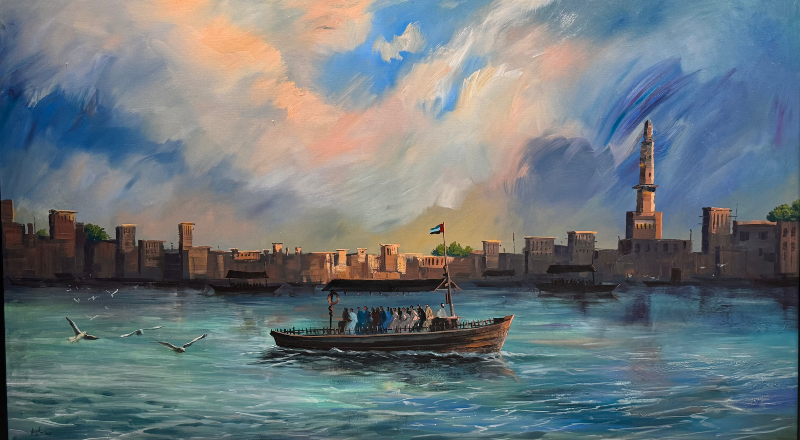
Artwork by Faezeh Mohammed