As an artist, I have come to believe that art is more than a means of expression. It can become a vehicle through time.
Whenever I decide to paint a historical place, I do not begin with colors or brushes. I begin with questions. I read about the place, its history, and the people who once lived there. I try to understand their world, imagine their daily lives, and connect with the stories that shaped their existence.
Through this process, painting becomes something greater than the representation of a landscape. It becomes an attempt to step beyond the present moment and enter a different era.
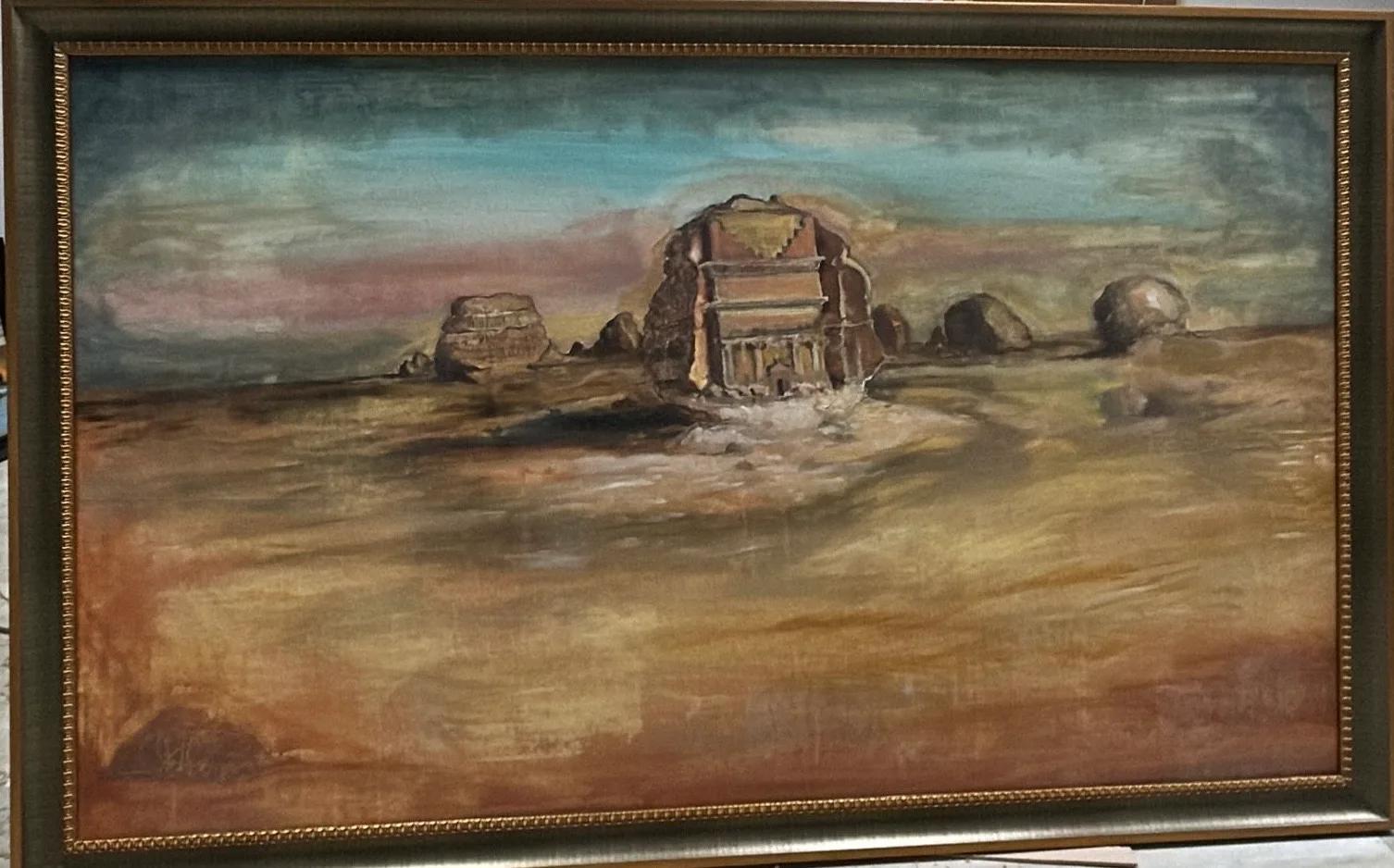
One of the most profound examples of this experience was my painting of AlUla. At first, I was drawn to its remarkable beauty. Yet the deeper I explored its history, the more the place revealed itself to me. Ancient civilizations, forgotten journeys, and traces of human lives emerged from the silence of the desert.
As I painted, I felt as though I stood between two worlds: the present holding the brush and the past guiding my imagination. Every stroke became an effort to bridge that distance.
The painting taught me something unexpected. Historical sites are not merely monuments of stone; they are witnesses to human dreams, struggles, conversations, and moments of beauty. What remains today are fragments of those stories, and art gives us a way to reconnect with them.
For this reason, I often think of art as a form of travel. Not travel across geography, but travel across time. It allows us to encounter people we will never meet and explore worlds that no longer exist.
The greatest gift art has given me is not the ability to create images, but the opportunity to discover perspectives beyond my own experience. Through painting, I have learned about histories I never knew, cultures I never lived, and stories that continue to shape our understanding of who we are.
In many ways, art has become my time machine.
And for that, I will always be grateful.
Saad